Contents
World Watch 2025, the latest publication by Chapman Tripp’s international law team, covers key public and private international law developments for New Zealand this year.
In our 2025 edition, we cover:
- the Government’s activity on the international trade front as it seeks to deliver its goal of doubling the value of New Zealand’s exports in ten years,
- amendments to New Zealand’s Russia sanctions regime, notably the expanded exception for New Zealand lawyers, which has been welcomed internationally,
- updates on cross-border dispute resolution, including settlement of New Zealand’s dairy dispute with Canada,
- arbitration reforms in the UK and other international regulatory developments,
- two recent advisory opinions, including the highly anticipated opinion from the International Court of Justice, demonstrating the significant focus at the international level on State obligations on climate change,
- key updates on international treaties and ongoing negotiations, and
- pacific-focused developments.
Our international law team has broad expertise advising on private and public international law matters, including cross-border disputes, international arbitration, international trade, sanctions, and international human rights law.
Chapter 1
International trade developments
New agreements and other significant developments
The Government has been highly active on the international trade front as it seeks to deliver its goal of doubling the value of New Zealand’s exports in 10 years.
- The New Zealand-United Arab Emirates Comprehensive Economic Partnership Agreement was signed on 14 January this year and the Government is moving at pace to have it ratified. The ratification Bill was introduced on 7 April and is due to be reported back on 10 October. The UAE is among New Zealand’s largest markets in the Middle East, taking $1.15b in NZ exports the year to September 2024.
- The first in-person negotiations towards an India-New Zealand free trade agreement (FTA) were held in May. New Zealand exports to India in 2024 amounted to $718m, the most significant being forestry, wool, logs, and apples. Dairy accounted for just $57m and MFAT Deputy Trade and Economic Secretary Vangelis Vitalis told a Waikato Farmers Forum in June that his Indian counterpart had warned him increased access was highly unlikely.
- On 27 May, Forestry and Trade Minister Todd McClay announced a new Cooperation Agreement between New Zealand and Viet Nam that aims to grow timber exports and remove trade barriers for the forestry sector.
- The New Zealand public consultation on Costa Rica’s application to join the Comprehensive and Progressive Agreement for Trans-Pacific Partnership (CPTPP) was completed at the end of June. Costa Rica had demonstrated its ability to meet the Auckland Principles adopted under the CPTPP. Now it must satisfy Members that it can comply with the obligations of CPTPP, including high quality market access commitments.
- Prime Minister Luxon met with European Commission President von der Leyen on 23 June and discussed the potential for closer cooperation between the EU and the CPTPP. Both leaders agreed to continue to support the launch of a dialogue between the EU and CPTPP as soon as possible.
Export growth
The Ministry of Primary Industries (MPI) has developed an eight-point plan to grow exports in the food and fibre sector, to help meet the Government’s goal of doubling the value of New Zealand exports by 2034. The MPI plan is available here.
The Government is reporting significant export growth to date.
- New Zealand goods exports to the EU increased 28% (from $3.8bn to over $4.8bn) in the first year of operation of the NZ-EU FTA to May 2025. Announcing the increase, Trade Minister Todd McClay said sheep meat exports were up 29%, kiwifruit 69% and machinery 104%.
- The latest Situation and Outlook for Primary Industries forecasts export earnings for the food and fibre sector of $59.9b for the year ending 30 June 2025 ($3bn higher than projected in December). Highlights include export revenue increases of 16% for dairy, driven by higher global prices, and 19% for horticulture, primarily from kiwifruit. The growth trajectory is expected to continue, reaching $61.4b in 2025-26.
15% tariffs from US
The United States has imposed a 15% tariff on New Zealand goods, effective seven days after Trump’s Executive Order, issued on 31 July 2025. Australia, which is a direct competitor in the US, remains on the 10% baseline rate that New Zealand had also been put on in the ‘Liberation Day’ announcement.
Exemptions continue for a small range of products, including copper, timber, processed critical minerals, pharmaceuticals and semiconductors, while aluminium and steel are subject to a higher 25% rate.
The US edged out Australia last year to become New Zealand’s second largest export destination after China and is our largest market for wine and red meat, so this is a blow.
New Zealand will attempt to negotiate a better deal, but hopes are not high given the existing rates were decided through a mechanistic formula based on balances in the trade relationship between the two countries.
Meanwhile the Government is exploring new opportunities for exports with the EU, UK, Gulf Cooperation Council countries (Bahrain, Kuwait, Oman, Qatar, Saudi Arabia, UAE) and India.
Despite the recent blow to confidence caused by the latest tariff announcement, much of the business community remains optimistic. New Zealand exporters are well-versed in navigating uncertainty and adapting swiftly to changing circumstances. The rise of middle-class markets among non-traditional trading partners presents considerable opportunities for expansion. NZ Inc and industry continue to view Free Trade Agreements as a means of introducing some predictability into an increasingly volatile global environment.
Georgie Austin Ellis, Senior ESG Advisor
Resolving non-tariff barriers
New Zealand is negotiating an Open Plurilateral Arrangement with other States to help resolve non-tariff barriers and recently consulted industry on support. Non-tariff barriers can take a number of forms, including subsidies, technical standards, procurement rules and quantity restrictions.
Solving them will require a multi-pronged approach, ranging from technical discussions to escalation strategies. Members of the Arrangement would information share and coordinate diplomatic efforts.
Chapter 2
Conflict
Arbitrators exempted from Russia sanctions regime
In June, the Russia Sanctions Regulations were amended to significantly expand the exception relating to New Zealand lawyers. Regulation 12(7) now provides that if a New Zealand person is a lawyer, they may deal with a restricted asset or a restricted service for the purpose of providing legal services:
- in connection with the Russia Sanctions Act or Regulations,
- whether qualified as a lawyer in New Zealand or overseas, in the jurisdiction in which they are qualified in a wider range of matters, including court proceedings (whether the proceeding has commenced or is reasonably in contemplation), or
- to act as a mediator, conciliator, or arbitrator in the jurisdiction in which they are qualified, whether in New Zealand or overseas.
The changes to New Zealand’s sanctions regime have been welcomed by New Zealanders overseas who are advising on sanctions related matters as counsel, as well as by the international arbitration community.
Nicola Swan, Partner
The outcome of MFAT’s review of the Russia Sanctions Act is pending. On 15 May, the UK Government released a policy paper following the review of its own autonomous sanctions regime. The paper commits the UK Government to introduce measures aimed at improving the implementation and enforcement of its regime.
Laura Green, Senior Associate
Sanctions and travel ban update
New Zealand’s Russia Sanctions Regulations have been amended several times this year:
- a further 25 entities and 27 individuals were added to the Schedule of sanctioned persons (the Schedule) in February, including actors involved in the forced relocation and re-education of Ukrainian children, or engaged in the military assistance provided by DPRK to Russia or in the oil-for-arms trade between Russia and the DPRK
- Alexander Abramov and his relatives were removed in April
- in June:
- 27 ships involved in the transport of Russian oil as part of Russia’s shadow fleet were prohibited from entering New Zealand ports; and
- a further eight entities and 10 individuals were added to the Schedule, including DPRK and Iranian actors providing military assistance or kit to Russia.
Separately, in June, New Zealand joined Australia, Canada, the UK and Norway in banning two extremist Israeli politicians, Finance Minister Bezalel Smotrich and National Security Minister Itamar Ben-Gvir, from entry to our country.
UN sanctions monitoring team releases first report
The Multilateral Sanctions Monitoring Team used its first report, issued on 29 May 2025, to explore the military cooperation between the Democratic People’s Republic of Korea (DPRK) and Russia, including arms transfers and Russian training of DPRK troops.
The team was set up to fill the gap created by the disbandment in April 2024 of the UN Security Council’s 1718 Committee Panel of Experts, caused by Russia’s veto. Members are Australia, Canada, France, Germany, Italy, Japan, the Netherlands, New Zealand, the Republic of Korea, the UK and the US.
Chapter 3
Cross border dispute resolution
NZ/Canada dairy dispute settled by negotiation
Canada and New Zealand have settled their long-running dairy export dispute by negotiation.
Announcing the deal on 18 July, New Zealand Trade and Investment Minister Todd McClay said it was worth $157m a year to New Zealand dairy exporters. The detail of the agreement will be published on 1 October 2025.
New Zealand initiated formal dispute settlement proceedings in respect of restrictive access to the Canadian market for dairy exports under the CPTPP in 2022. When Canada failed to fully comply with the panel’s ruling, New Zealand threatened further action last year, including the imposition of retaliatory tariffs against Canadian exporters. The detail of the agreement will be published on 1 October 2025.
Effect of ratification of the New York Convention on sovereign immunity
The courts of Australia and the United Kingdom have recently considered whether and when State ratification of the New York Convention on the Recognition and Enforcement of Foreign Arbitral Awards amounts to a waiver of sovereign immunity.
At issue was an attempt by companies in the Devas Group, incorporated in Mauritius, to enforce an award against India in connection with breaches of the Bilateral Investment Treaty between India and Mauritius on the basis that, by ratifying the Convention, India had waived sovereign immunity from enforcement of the award.
The argument failed in both the Full Federal Court of Australia1 and the High Court of England and Wales2, although they reached their conclusion through different routes.
The Australian Court was persuaded by the fact that India had made a commercial reservation to the Convention with the effect that it would be applicable only to “differences arising out of legal relationships, whether contractual or not, which are considered as commercial under the Law of India”.
Devas argued that the only effect of the reservation was unilateral (that is, it excused India, not Australia, from the requirement to enforce non-commercial awards). But the Australian Court rejected this argument, citing authorities on treaty interpretation for the proposition that:
“the effect of a reservation is that between the reserving and accepting state… the reservation modifies the provision of the treaty to the extent of the reservation for each party reciprocally”.
Accordingly, Australia had no obligation under the Convention to enforce awards against India (and India had not agreed that Australia would do so).
The English High Court found that India’s accession to the New York Convention did not amount to a waiver of sovereign immunity at all, citing Article III which provides that:
“[e]ach Contracting State shall recognise arbitral awards as binding and enforce them in accordance with the rules of procedure of the territory where the award is relied upon…”.
These developments will be of interest to parties seeking to enforce foreign arbitral awards against States using the Convention, including before the New Zealand courts.
Chapman Tripp has successfully acted in proceedings to have an ICSID award recognised by the New Zealand courts, by entry as a judgment.3
1. Republic of India v CCDM Holdings LLC [2025] FCAFC.
2. Devas v Republic of India [2025] EWHC 964.
3. Sodexo Pass v International SAS [2021] NZHC 371.
The purpose of the New York Convention is to promote certainty and efficiency in the enforcement of arbitral awards across borders, including against foreign States. These proceedings are a salutary warning that, when attempting to enforce an award against a foreign State, this purpose may well give way to sovereign immunity.
Jared Papps, Senior Associate
New Zealand High Court refuses to second guess arbitral tribunal award in international arbitration
In May 2024 the High Court dismissed an application to set aside a final arbitral award on costs, arising from an international arbitration with the offshore counterparty.1
The arbitrator had determined that given his assessment that each of the parties had been successful in the arbitration, the significant costs incurred should lie where they fell. BRL applied to set aside this decision on the basis it conflicted with public policy, arguing it departed from the approach followed by senior courts in previous related cases, potentially creating an issue estoppel, and a breach of natural justice.
The High Court upheld the arbitrator’s approach to costs, determined that no issue estoppel arose because the issues in the arbitration were distinct from those in previous related litigation, and determined that the arbitrator was not bound by previous cost-related decisions in the courts as the matters dealt with in the arbitration were distinct.
The High Court also rejected an ancillary application that the proceedings remain confidential, despite the existence of a confidentiality clause in the arbitration agreement between the parties, on the grounds of open justice and public interest in the case. La Hood J emphasised in making this decision that the dispute between the parties had been the subject of public decisions, there was a public interest in the dispute between the parties, and that one of the parties had made public statements made about the arbitration and its outcome. The High Court determined that its decision as to the review by the Court of the tribunal’s costs award would be made open to public scrutiny.
*Chapman Tripp acted for LMCHB Limited, the respondent, which was successful in rejecting the main application.
1. Bathurst Resources Ltd v LMCHB Ltd [2024] NZHC 1058.
This proceeding highlights the risk parties face when challenging otherwise confidential arbitral awards in the public court system. The decision of La Hood J illustrates that in cases where the principles of open justice and public interest are engaged, parts of confidential arbitral awards can be made open to public scrutiny by the courts.
Isla Doidge, Senior Associate
Wikeley v Kea Investments
In November 2024, the Court of Appeal discharged1 permanent worldwide anti-suit and anti-enforcement injunctions awarded by the New Zealand High Court against Wikeley Family Trustee Limited (WFTL). Those injunctions were made in respect of a default judgment obtained by WFTL in Kentucky against Kea Investments Ltd, a British Virgin Islands company. Interim liquidators had been appointed to WFTL in April 2023 following attempts to transfer the default judgment out of WFTL’s control.
The High Court and the Court of Appeal agreed that the Kentucky judgment had been fraudulently obtained by WFTL, whose principal was New Zealander Kenneth Wikeley, as it had relied on an alleged breach of a purported coal agreement that was in fact a forgery.
Kea had not appeared in Kentucky’s Fayette Circuit Court to defend the proceeding which, while served on Kea’s agent, had not been brought to Kea’s attention. When Kea became aware of what had transpired, it applied to the Fayette Circuit Court to set aside the Kentucky Default Judgment but was declined. Kea lodged an appeal against that decision, which remains live, then sought remedy in the New Zealand courts.
Anti-suit and anti-enforcement injunctions are rare because they pre-empt the ability of courts in other countries to exercise their jurisdiction and so are against the principle of “international comity” – which the Court of Appeal affirmed was important to the smooth functioning of private international law as, without it, there is a risk of conflicting decisions and uncertainty.
The question was whether granting these injunctions was in this case “a push too far”, notwithstanding the fraud findings.
The overriding consideration for the Court of Appeal in deciding to unwind the High Court’s decision was that the Kentucky Circuit Court appeal was still on foot and New Zealand courts should recognise that the US judicial system is capable of addressing any issues of fraud or abuse of process arising in US proceedings.
At the same time, the Court confirmed the appointment of interim liquidators of WFTL and found that it was “unaffected by discharge of the anti-suit and anti-enforcement injunctions”. In doing so, the Court acknowledged that the discharge of the injunctions could result in the interim liquidators facing pressure to enforce the default judgment, and that the interim liquidators may then need to seek directions to deal with such circumstances.
The New Zealand Supreme Court has granted Kea leave to appeal the Court of Appeal’s decision to discharge the injunctions (while dismissing a separate application by Mr Wikeley to appeal the findings that the coal agreement was a forgery and the default judgment was obtained by fraud).
This case demonstrates – subject to the final outcome in the Supreme Court – that the New Zealand courts will be slow to disturb comity, even when a foreign judgment has been obtained dishonestly, but that it will be prepared to intervene where the circumstances justify it.
*Chapman Tripp acted for the interim liquidators of the second respondent in this case.
1. Wikeley v Kea Investments Limited [2024] NZCA 609.
Chapter 4
International regulatory developments
Arbitration reforms in the United Kingdom
The recently passed Arbitration Act 2025 (UK) contains amendments to the United Kingdom’s Arbitration Act 1996 which will soon enter into force.
The key changes in the Act include:
- express provision that the arbitration agreement is governed by either (a) the law that the parties have expressly agreed applies to the arbitration agreement or (b) where no such agreement is made, the law of the seat of the arbitration
- provisions setting out that emergency arbitrators can make peremptory orders, and that court powers in support of arbitral proceedings can be exercised in relation to decisions of an emergency arbitrator in certain circumstances
- allowing arbitral tribunals to make awards on a summary basis where the tribunal considers that a party has no real prospect of succeeding on a claim, defence or issue
- permitting rules of court to restrict the matters that can be raised before the court by a party challenging an arbitral tribunal’s ruling as to its substantive jurisdiction – specifically, rules of court may provide that, subject to the court ruling otherwise in the interests of justice:
- a party may not raise in court new grounds of objection or evidence, save where it was not reasonably possible to raise the objection or evidence before the tribunal; and
- evidence that was heard by the tribunal must not be re-heard by the court
- enabling an arbitral tribunal to award costs irrespective of whether the tribunal, or a court, has held that the tribunal lacks substantive jurisdiction (either because it has no substantive jurisdiction or has exceeded its substantive jurisdiction), subject to any agreement of the parties
Some of the reforms diverge from the current policy position in New Zealand. It remains to be seen whether New Zealand legislators will follow the United Kingdom example and make similar amendments to our Arbitration Act 1996.

The Arbitration Act 2025 is a series of targeted amendments rather than an overhaul of the Arbitration Act. However, it aims to modernise, simplify and in places – clarify – the law. The Government expressly acknowledged the intent of the Act is to help maintain the UK’s position as a world-leader in arbitration. The law of the seat, and its support for arbitrations, is an important consideration for parties. As one of the leading international seats, it is positive to see the UK’s continued championing of arbitration.
Emma Peart, Senior Associate
International climate and sustainability reporting
Chapman Tripp has updated the headline analysis from its April 2024 report for public-private body The Aotearoa Circle surveying climate and sustainability reporting regulations (including climate-related disclosures (CRD)) in key New Zealand trading partners.
The update shows that 70% of New Zealand’s export value is going to economies with mandatory climate disclosures in place or soon to be in force. This figure reduced from 80% last year due to the removal by President Trump of mandatory federal reporting in the United States, but notably all of the economies surveyed that introduced or progressed CRD regulations since last year are in the Asia Pacific, underscoring the role of this region as the emerging hub of ESG disclosures globally. Climate reporting is also incoming in California and New York.
A 2025 view of global climate & sustainability disclosure regulations paints a more nuanced and divergent picture than last year. Notwithstanding changes in major markets like the US, data shows such rules to be on an upward trajectory, particularly in the Asia Pacific – meaning they remain a critical part of the international regulatory landscape for Kiwi exporters.
Kate Wilson Butler, Director - Climate, Sustainability & ESG
European Green Deal developments
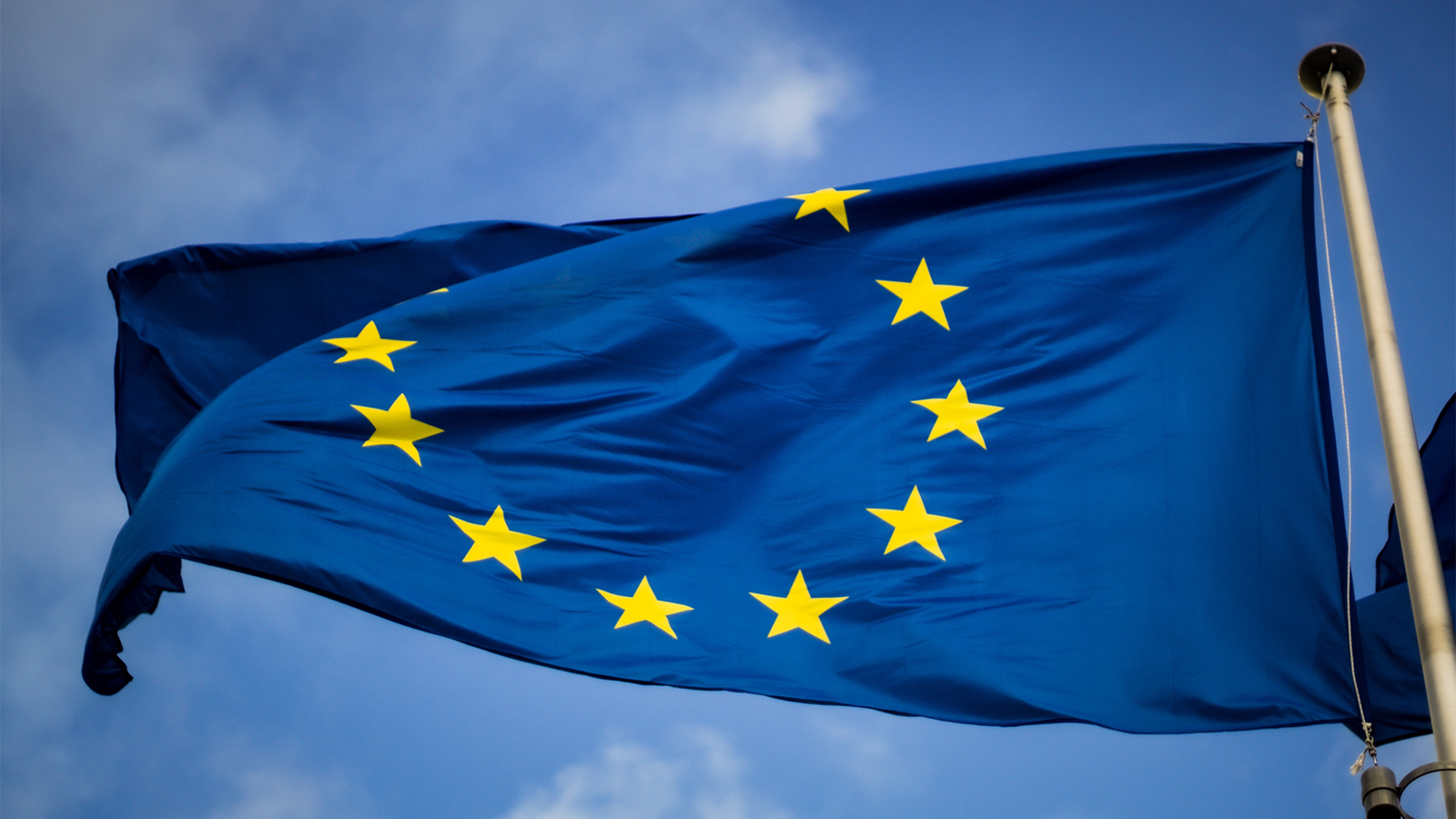
The European Commission is moving to simplify key regulations under the European Green Deal. Both the EU Corporate Sustainability Reporting Directive (CSRD) and Corporate Sustainability Due Diligence Directive (CSDDD) are proposed to be amended under an ‘Omnibus Package’ approved by the European Parliament on 3 April 2025.
- The CSRD is expected to continue to be implemented, although on a slower timeline and with less expansive reporting requirements than originally envisaged, including a proposal to limit its scope to large companies with more than 1000 employees.
- The CSDDD as originally passed introduces a requirement for very large entities to identify, prevent, mitigate and remediate the adverse impacts of their activities on human rights and the environment in Europe and beyond. This is also being amended through proposals to extend the compliance deadline and to limit the due diligence obligation to direct business partners.
The European Parliament, Council, and Commission are involved in negotiations to finalise the Omnibus package, with a vote in the Parliament currently scheduled for October 13, 2025.
Chapter 5
Foreign courts on international obligations
State obligations on climate change
Two recent advisory opinions demonstrate the significant focus at international level of State obligations on climate change:
1. International Court of Justice
On 23 July 2025, the International Court of Justice (ICJ) delivered its Advisory Opinion on the obligations of States in respect of climate change. The decision was emphatic, finding that that, in addition to obligations under the climate change treaty regime, States have obligations under customary international law and international human rights law to take appropriate and precautionary measures to prevent harm to the climate system. Significantly, the Court held that “Failure of a State to take appropriate action to protect the climate system from GHG emissions — including through fossil fuel production, fossil fuel consumption, the granting of fossil fuel exploration licences or the provision of fossil fuel subsidies — may constitute an internationally wrongful act which is attributable to that State.”
The Advisory Opinion was the culmination of efforts by Vanuatu and other small States, supported by “core group” of 17 countries, including New Zealand as a co-sponsor. Although non-binding, it may give further impetus to the trend of citizens pressuring policymakers to take stronger action on climate change.
2. Inter-American Court of Human Rights
The Inter-American Court of Human Rights in Advisory Opinion 32/25 has affirmed the existence of a human right to a healthy climate and the entitlement to remedy and reparation for climate-related harm. The Court said States must refrain from conduct that contributes to accelerated climate change, and that they have a duty adequately to regulate and supervise business activities for that purpose. Notably, the Court also recognised an obligation on States actively to counter climate disinformation.
The Opinion is a landmark decision for climate rights activists and is likely to have legal effect beyond the parties to the American Convention on Human Rights
*Partner Nicola Swan acted for the Commission of Small Island States on Climate Change and International Law, including several Pacific States, before the Inter-American Court of Human Rights.
Lliuya v RWE German climate decision
On 28 May 2025, the Court announced its decision in the long-standing climate change proceedings brought by Peruvian farmer, Saúl Luciano Lliuya, against German utility provider, RWE. Although the Court dismissed the plaintiff’s claim against RWE, it left open the possibility that other major emitters could be held liable for damage from climate change under German civil law.
Shell v Verniging Milieudefensie
In December 2024 in Shell v Milieudefensie – a landmark case addressing the civil liability of large private companies for climate change harm – the Hague Court of Appeal:
- held, in general terms, that Shell has a legal obligation to limit its emissions, but
- declined to impose any emissions reduction target on Shell, on the basis that it was not possible to identify any specific targets that would effectively reduce the effects of climate change.
The judgment unwound a previous decision in the Hague District Court. Milieudefensie, the Dutch environmental organisation that took the case, has lodged an appeal with the Supreme Court of the Netherlands.
Pabai v Commonwealth of Australia
On 15 July, in Australia – Pabai v Commonwealth of Australia the Federal Court of Australia issued its judgment, finding in favour of the Australian Government in a climate justice case brought by two indigenous Torres Strait Islanders. The Court recognised the devastating damage and loss experienced by the Torres Strait population but did not find negligence on the Government’s part as the government conduct relating to core matters of policy were beyond its jurisdiction. It also found that the Australian Government did not owe the islanders a particular duty of care.
Mathur v Ontario
In December 2024 in Canada - Mathur v Ontario the Ontario Court of Appeal ruled in favour of seven youth activists, overturning an earlier dismissal of their application for a declaration that the Ontario Government violated their rights under ss 7 and 15 of the Canadian Charter of Rights and Freedoms (the right to life, liberty and security of the person; and equal protection under the law). The Court held that Ontario had “voluntarily assumed a positive statutory obligation to combat climate change and to produce the Plan and the Target for that purpose” so was therefore obliged to comply with those obligations. The Ontario Government sought to appeal the decision in the Supreme Court of Canada but the application was rejected on 1 May 2025. This case will now go to the Ontario Superior Court to consider remedies.
Chapter 6
International treaties and United Nations
WHO Pandemic Agreement adopted
On 20 May, the World Health Organization (WHO) adopted by consensus after three years of intensive negotiations, the world’s first Pandemic Agreement. The resolution sets out implementation steps, including a process to draft and negotiate a Pathogen Access and Benefit Sharing system (PABS). Once this has been adopted by the Assembly, the Pandemic Agreement will be open for signature and ratification. After 60 ratifications, it will enter into force. The New Zealand Government is considering whether New Zealand will sign.
Negotiations adjorn on Global Plastic Treaty
The Intergovernmental Negotiating Committee (INC) on Plastic Pollution resumed negotiations on 5 August in Geneva. It was the sixth round of talks aimed at developing a treaty to end plastic pollution, after negotiators failed to reach an agreement in December last year. This sixth round of talks ended without consensus, with a split between nations calling for curbs on production of plastic, and other States pushing for a focus on recycling. Member States agreed to resume discussions at a future date.
New Zealand has agreed to support an instrument that establishes an effective global regime to reduce plastic waste and eliminate plastic pollution on a global scale, covering the full lifecycle of plastics.
Chapter 7
Pacific
AUKUS update
The latest formal statement on the New Zealand Government’s stance on AUKUS (the trilateral security partnership between Australia, the UK and the US) was from Foreign Minister Winston Peters on 17 June in a keynote speech to the New Zealand Institute for International Affairs - and he said “a year on, there is nothing new to report”.
He reiterated that the Government “would update New Zealanders on Pillar 2 when there [is] something new to say”, adding “in conditions of great uncertainty and disorder, such as we are currently experiencing, prudence is both a logical and necessary guiding principle for a small State like New Zealand”.
A Pacific-focused visit to France
In June, Minister Winston Peters attended the sixth Pacific-France summit and the third United Nations Oceans Conference, both in France.
Peters described the summit as focused on regional stability, economic development and climate resilience at a time when the region faced unique threats to its security and stability. He reinforced the importance of the Pacific Islands Forum as “the best way to support regional stability in the Pacific” and called on partners engaging with the region to do so in a manner that is transparent and supportive of good governance, saying not all were taking that approach.
Minister Peters later paused almost $20m in development aid to the Cook Islands after its Prime Minister Mark Brown signed a Comprehensive Strategic Partnership with China without first consulting New Zealand, despite the Cook Islands’ formal arrangement of “free association” with New Zealand.
At the UN Oceans Conference, New Zealand re-emphasised its commitment to support Pacific partners in their efforts to enhance science-based ocean management and ensure their fisheries are sustainable and climate-resilient.
Burnham meeting
In early June, New Zealand hosted post-referendum talks at Burnham Military Camp between the Government of Papua New Guinea and the Autonomous Bougainville Government, facilitated by Sir Jerry Mateparae and his United Nations team.
Mr Peters explained New Zealand’s involvement was to provide the venue and environment necessary for substantive discussions on Bougainville’s political future. New Zealand is a witnessing signatory to the Bougainville Peace Agreement.